Although considered to be among the higher kata, Tekki Nidan and
Tekki Sandan are listed as basic kata for purely organizational reasons.
The
Heian
Kata
are
called
Pinan
in
Shuri-te,
which
has
the
same
meaning.
The
Heian
Kata
of
Shotokan
have
been
modified
to
a
greater
or
lesser
extent
and
generally
adapted
to
the
kihon
of
the
style.
The
distinctive
feature
of
Shotokan
kihon
primarily
concerns the use of the hips.
Meaning of the name
Basic Kata 1
Moves: 20

Taikyoku Shodan
Classification
Shorin-Ryu
Style
Shotokan
Level
Basic
Taikyoku
literally
means
universe,
but
the
term
is
used
in
many
different
ways,
including
for
restaurants.
It
is
puzzling
why
the
term
was
used
for
a
series
of
basic
Kata.
From
a
physical
perspective,
the
universe
is
ultimately
made
up
of
fundamental
elements.
On
the
one
hand,
of
atomic
and
subatomic
particles,
and
on
the
other,
of
clearly
defined
laws
of
nature.
And
from
these
relatively
few
things,
an
infinite
variety
has
emerged.
The
Taikyoku
Kata
can
be
understood
in
a
similar
way.
Although
they
consist
only
of
basic
techniques,
they
contain
the
principles
on
which
karate
is
built.
In
other
words,
to
understand
the
complex,
you
must
first
learn
the
basics.
Taikyoku
Shodan
follows
the
Enbusen
of
Heian
Shodan,
but
consists
only
of
Gedan Barai and Oi zuki.

Meaning of the name
Basic Kata 2
Moves: 20

Taikyoku Nidan
Classification
Shorin-Ryu
Style
Shotokan
Level
Basic
The
only
difference
to
Taikyoku
Shodan
is
that
the
Oi
zuki
is
performed in Jodan.
Meaning of the name
Basic Kata 3
Moves: 20
Taikyoku Sandan
Classification
Shorin-Ryu
Style
Shotokan
Level
Basic
In
Taikyoku
Sandan
the
differences
are
also
minimal
and
primarily
concern
the
Uke
technique,
which
is
practiced
here
as
Uchi
Uke
in
Kokutsu Dachi.
Meaning of the name
Peaceful Mind 1
Moves: 25
Heian Shodan
Classification
Shorin-Ryu
Style
Shotokan
Level
Basic
The
Heian
Shodan
of
Shotokan
corresponds
to
the
traditional
Heian
Nidan.
However,
the
beginning
of
the
Kata
has
been
changed,
so
that
it begins with Gedan Barai.
In
Shotokan,
it
is
a
fundamental
foundational
Kata,
very
well
suited
for improving kihon and the specific biomechanics of Shotokan.
For more details, see:
Shito-Ryu Heian Nidan

Meaning of the name
Peaceful Mind 2
Moves: 31

Heian Nidan
Classification
Shorin-Ryu
Style
Shotokan
Level
Basic
Heian
Nidan
corresponds
to
the
traditional
Heian
Shodan.
The
reversal
of
the
names
may
be
due
to
the
fact
that
the
original
Heian
Shodan
is
more
complicated
and
contains
more
movements
and
combined
techniques.
Heian
Nidan
is
difficult
to
teach
for
first-time
karate
students,
especially
in
larger
groups.
Therefore,
the
names
were
reversed,
and
the
second
Kata
became
the
first.
Heian
Nidan
is
quite demanding and, at the beginning, is reminiscent of Kanku Dai.
For more details, see:
Shito-Ryu Heian Shodan

Meaning of the name
Peaceful Mind 3
Moves: 28
Heian Sandan
Classification
Shorin-Ryu
Style
Shotokan
Level
Basic
Heian
Sandan
is
nearly
original.
Only
the
midsection
with
the
turnings
and
the
end
of
the
Kata
has
a
different
performance,
though
the
techniques are still the same like in the original version.
Für mehr Details siehe:
Shito-Ryu Heian Sandan
Meaning of the name
Peaceful Mind 4
Moves: 32
Heian Yondan
Classification
Shorin-Ryu
Style
Shotokan
Level
Basic
The
beginning
of
Heian
Yondan,
in
particular,
has
been
significantly
altered.
Instead
of
a
fast
shuto
uke
with
shuto
age
uke,
the
kaishu
heiwan
uke
is
performed
deliberately
slowly,
requiring
a
certain
amount
of
leg
muscle
strength.
In
the
middle
section
of
the
Kata,
the
yoko
uke
has
also
been
replaced
by
the
two-handed
kakiwake
uke.
If
one
forgets
to
pull
the
left
leg
forward
to
heisoku
dachi,
which
is
required
after
the
yoko
geri
with
empi
uchi,
the
Kata
ends
well
behind
the
starting
point,
which
would
be
incorrect
according
to
the
peculiarities of Shotokan.
For more details, see:
Shito-Ryu Heian Yondan
Meaning of the name
Peaceful Mind 5
Moves: 26
Heian Godan
Classification
Shorin-Ryu
Style
Shotokan
Level
Basic
Heian
Godan
is
the
Kata
that
has
undergone
the
most
changes.
But
even
here,
it
mostly
only
affects
details
of
execution.
For
example,
in
Shotokan,
an
ura
zuki
was
added,
following
empi
uchi
in
kosa
dachi.
The
ending
of
the
Kata
was
also
significantly
altered
and
now
resembles sections of Kanku Dai.
For more details, see:
Shito-Ryu Heian Godan
Meaning of the name
Iron rider 1
Moves: 27
Tekki Shodan
Classification
Shorin-Ryu
Style
Shotokan
Level
Basic
In
the
Tekki
Kata,
the
term
Naifanchin,
which
refers
to
the
Naifanchin
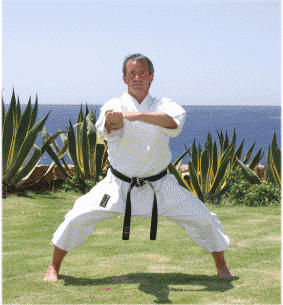
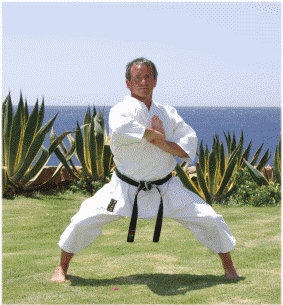
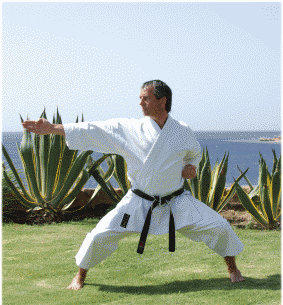
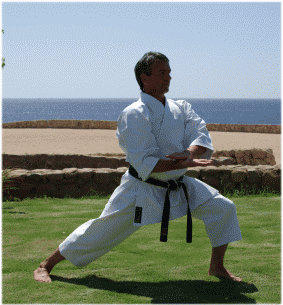
Dachi stance, has been replaced by Tekki.
Tekki
means
iron
rider
and
thus
also
refers
to
the
main
stance
used
in
the
Kata.
In
Shotokan,
it
is
the
Kiba
Dachi,
which
is
similar
to
the
Naifanchin
Dachi
but
differs
significantly
in
depth,
width,
and
muscular work.
For more details, see:
Naifanchin Shodan
Meaning of the name
Iron rider 2
Moves: 30
Tekki Nidan
Classification
Shorin-Ryu
Style
Shotokan
Level
Medium
The
Tekki
Nidan
also
differs
from
the
Naifanchin
Nidan
only
in
the
stance
and
a
slightly
different
execution
of
some
techniques,
which,
however, affect the targeted area more than the movement itself.
For more details, see:
Naifanchin Nidan
Meaning of the name
Iron rider 3
Moves: 35
Tekki Sandan
Classification
Shorin-Ryu
Style
Shotokan
Level
Medium
The
most
variations,
however,
are
found
in
Tekki
Sandan,
which
is
performed
slightly
differently
even
among
some
Shotokan
masters.
This
mainly
affects
the
technical
combinations
at
the
beginning
and
middle
of
the
Kata.
Likewise,
as
with
Tekki
Nidan,
some
target
areas
are Gedan instead of Chudan.
For more details, see:
Naifanchin Sandan
Datenschutzerklärung:
Bei
karatekata.de
handelt
es
sich
um
ein
rein
informatives
Online
Angebot ohne kommerzielle Funktionen.
Alle
hier
veröffentlichten
Publikationen
enthalten
persönliche
Meinungen
des
Autors.
In
Fällen,
in
denen
externe
Informationen
eingebunden
werden,
werden
entsprechende
Quellenangaben
hinzugefügt.
Links
zu
anderen
Internetangeboten
oder
automatische
Weiterleitungen
sind
nicht
implementiert.
Navigation
Kata

DSGVO relevante Cookies sind nicht implementiert.
















































karatekata.de


