Meaning of the name
Brake
through
the
Fortress
(big)
Moves: 55

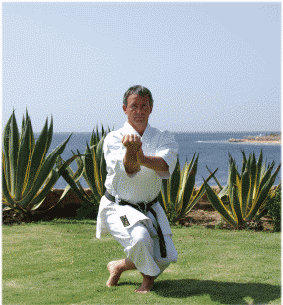
Bassai Dai
Classification
Shorin-Ryu
Style
Shotokan
Level
Medium
The
roots
of
the
Kata
date
back
to
the
17th
century
and
to
a
form
called
Patsai,
which
originates
from
the
Chinese
Quan
Fa.
Tomari
Bassai is probably the most similar to the original Patsai.
Bassai
Dai,
on
the
other
hand,
is
a
work
by
Yasutsune
Itosu
and
incorporates elements from Tomari Bassai and Matsumura Bassai.
In
Shotokan,
it
has
undergone
only
minor
changes,
with
the
addition
of
one
technique.
Particularly
striking,
however,
is
the
change
to
Yamazuki.
In
Shotokan,
this
is
performed
with
the
body
deeply
bent,
standing
in
a
line,
which
is
much
more
reminiscent
of
the
ancient
Chinese techniques.
For more details, see:
Shito-Ryu Bassai Dai.

Meaning of the name
Brake
through
the
Fortress
(small)
Moves: 34
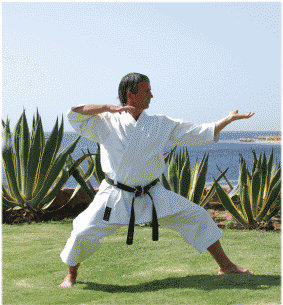
Bassai Sho
Classification
Shorin-Ryu
Style
Shotokan
Level
Medium
Bassai
Sho
is
a
rarely
practiced
Kata
in
Shotokan.
It
also
plays
a
minor
role
in
competition.
This
does
not
do
the
Kata
justice.
When
properly
executed,
it
offers
a
beautiful
alternation
between
dynamism
and elegance.
However,
there
are
some
significant
changes
compared
to
the
original
version
by
Itosu.
These
primarily
affect
the
middle
section,
where
Mae
Geri
is
performed
in
the
old
version,
and
the
end
of
the
Kata.
Here,
a
rather
difficult
grappling
movement
with
synchronized
Ashi-
Barai
has
been
incorporated
in
Shotokan,
whereas
the
original
only
featured Shuto Uke.
For more details, see:
Shito-Ryu Bassai Sho.
Meaning of the name
Seldom hand
Moves: 38
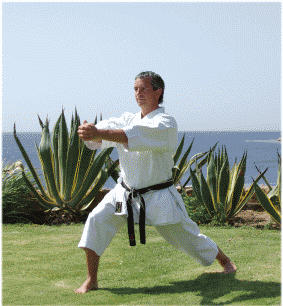
Chinte
Classification
Shorin-Ryu
Style
Shotokan
Level
Medium
In
Shotokan,
it
is
considered
a
rarely
practiced
Kata.
It
is
sometimes
considered
a
feminine
Kata
because
the
Nihon
Nukite,
which
targets
the
eyes,
does
not
require
great
physical
strength.
In
reality,
however,
the
power
of
karate
comes
more
from
the
technical
quality
of
a
technique
than
from
muscular
strength.
Therefore,
the
above
view is inappropriate.
The
Chinte
Kata
has
undergone
the
most
significant
changes
in
the
stances
used.
The
three
jumps
at
the
end
of
the
Kata
also
do
not
exist
in
the
original
form.
However,
they
are
a
very
good
exercise
for
a specific form of Yori Ashi.
For more details, see:
Shito-Ryu Chinte.

Meaning of the name
Flight of the swallow
Moves: 47
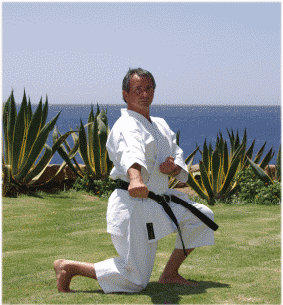
Empi
Classification
Shorin-Ryu
Style
Shotokan
Level
Medium
Shotokan's
Empi
was
developed
from
Tomari
Wanshu.
Both
the
techniques
and
the
enbusen
were
significantly
modified.
The
character
of
the
Kata
also
no
longer
corresponds
to
the
original.
Empi
practices
a
pronounced
alternation
between
high
and
low
attacks.
The
Kata
exhibits
a
high
pace
with
rapid
changes
of
direction,
similar
to
the flight of a swallow.
For more details, see:
Tomari Wanshu
Meaning of the name
Crane on the rock
Moves: 45
Gankaku
Classification
Shorin-Ryu
Style
Shotokan
Level
Advanced
The
Gankaku
of
Shotokan
is
very
similar
to
the
Chinto
of
Shito-Ryu.
Beside
the
stances
the
main
different
is
the
using
of
Yoko
Geri
instead
for
Mae
Geri.
Compared
with
Chinto
and
especially
with
Tomari
Chinto
the
roots
of
the
white
crane
style
are
fading.
Because
after
doing
Manji
Uke
a
Yoko
Geri
will
be
performed
it's
more
difficult
to
keep
balance
as
in
Chinto.
This
makes
the
Kata
to
one
of
the
most
difficult
of Shotokan.
For more Details:
Chinto
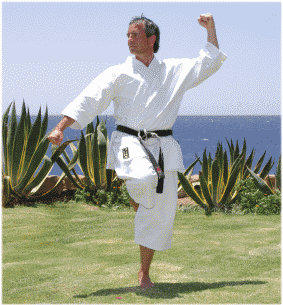

Meaning of the name
Music of the temple
Moves: 51

Jion
Classification
Shorin-Ryu
Style
Shotokan
Level
Medium
Jion
is
one
of
the
most
fundamental
Kata
of
Shotokan.
It
is
therefore
taught shortly after the Heian Kata has been learned.
Hardly
any
other
Kata
places
such
high
demands
on
the
thigh
muscles.
Overall,
the
Kata
is
a
distinctly
strength
Kata,
which
is
evident
in
the
high
muscle
tension
displayed
even
in
the
slowly
executed
techniques.
For more details, see:
Shito-Ryu Jion.
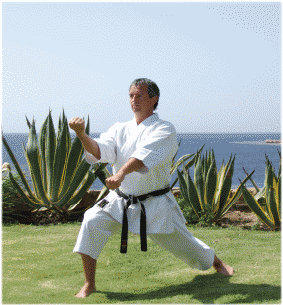
Meaning of the name
Ground of the temple
Moves: 39
Ji’in
Classification
Shorin-Ryu
Style
Shotokan
Level
Medium
The
Ji'in
Kata
also
exists
in
Shotokan
in
at
least
two
versions.
This
is
particularly
interesting
because
the
Kata
itself
is
rarely
practiced.
Some
of
its
key
features
are
kosa
uke
and
back
turns
with
tetsui
uchi
or
manji
uke,
depending
on
the
practiced
version
of
the
Kata.
The
Kata
challenges
the
leg
muscles,
as
well
as
an
upright
posture,
without which the difficult turns cannot be executed correctly.
For more details, see:
Shito-Ryu Ji’in.

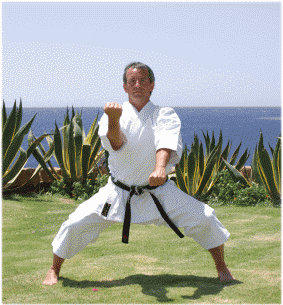
Meaning of the name
Ten hands
Moves: 29
Jitte
Classification
Shorin-Ryu
Style
Shotokan
Level
Medium
The
Kata
Jitte
has
been
given
several
additional
techniques
in
Shotokan,
such
as
te
zukami
standing
on
one
leg.
Furthermore,
some
techniques
are
performed
much
more
slowly.
The
Ashi
Barai
before
the
Yama
Uke
also
doesn't
exist
in
the
original.
However,
this
form
of
practicing
Yama
Uke
is
particularly
well-suited
for
strengthening
the
core
muscles,
which
are
particularly
important
in
close
combat.
Jitte
is therefore a very good Kata for physical strengthening.
For more details, see:
Shito-Ryu Jitte.
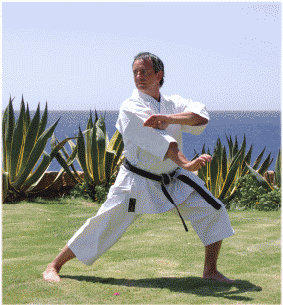
Meaning of the name
Look to the sky (groß)
Moves: 71
Kanku Dai
Classification
Shorin-Ryu
Style
Shotokan
Level
Advanced
Kanku
Dai
is
considered
the
quintessential
Shotokan
Kata.
It
demands
a
high
level
of
stamina
and
promotes
muscular
development.
The
most
notable
changes,
besides
the
replacement
of
mae-geri
with
yoko-geri,
are
the
ura-zuki
technique
followed
by
a
duck
to
the
ground.
This
is
not
performed
in
the
original.
Apart
from
the
usual
Shotokan-typical
changes
in
biomechanics
and
stances,
there
are
no
significant
differences.
The
name
was
changed
to
Kanku,
"looking
to
the sky," and refers to the opening movement of the Kata.
For more details, see:
Kosokun Dai
Meaning of the name
Schau zum Himmel (klein)
Moves: 63
Kanku Sho
Classification
Shorin-Ryu
Style
Shotokan
Level
Advanced
Kanku
Sho
differs
significantly
from
Kanku
Dai.
Interestingly,
it
includes
a
Rohai
Sandan
combination,
which
also
applies
to
Kosokun
Sho.
In
Shotokan,
it
was
adopted
from
Mabuni's
Shito
Ryu
and
slightly
modified.
For
example,
the
jump
in
the
middle
section
of
the
Kata
is
originally
performed
as
a
rotation
around
the
body's
axis.
The
combination
following
the
Uraken
Uchi
in
Kosa
Dachi
has
also
been
significantly
altered;
in
the
original,
Age
Uke
and
Gyaku
Zuki
are
practiced.
For more details, see:
Kosokun Sho
Datenschutzerklärung:
Bei
karatekata.de
handelt
es
sich
um
ein
rein
informatives
Online
Angebot ohne kommerzielle Funktionen.
Alle
hier
veröffentlichten
Publikationen
enthalten
persönliche
Meinungen
des
Autors.
In
Fällen,
in
denen
externe
Informationen
eingebunden
werden,
werden
entsprechende
Quellenangaben
hinzugefügt.
Links
zu
anderen
Internetangeboten
oder
automatische
Weiterleitungen
sind
nicht
implementiert.
Navigation
Kata
DSGVO relevante Cookies sind nicht implementiert.


















































karatekata.de


