Meaning of the name
Name of a chinese Master
Moves: 71

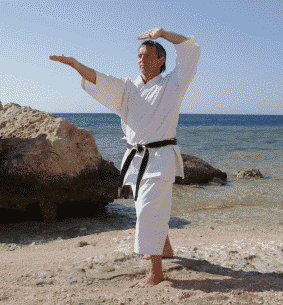
Kosokun Dai
Classification
Shorin-Ryu
Style
Shito Ryu / Shotokan
Level
Advanced
Kosokun
Dai
is
a
work
by
Yasutsune
Itosu.
This
master
of
Shuri-te
modified
or
developed
many
old
Kata.
The
reasons
for
this
are
unknown.
However,
since
the
new
developments,
such
as
Kosokun
Dai,
are
significantly
simpler
than
the
original
forms,
this
may
be
related to Itosu's planned publication of karate.
The
Kosokun
Dai
is
called
Kanku
Dai
in
Shotokan,
where
Kanku
means
"looking
toward
the
sky,"
which
is
derived
from
the
opening
movement
of
the
Kata.
In
Shotokan,
only
a
few
technical
details,
particularly the stances used, were changed.
The
Kosokun
Dai
is
significantly
shorter
than
the
Kushanku
from
which
it
was
developed.
Nevertheless,
it
is
one
of
the
longest
Kata
in
karate
and
its
execution
requires
a
certain
level
of
stamina.
It
symbolizes
the
fight
against
eight
opponents.
However,
this
does
not
mean
that
the
Kata
represents
the
simultaneous
fight
against
eight
attackers.
Since
the
Kata
teaches
a
wide
variety
of
forms
of
attack
and
defense,
with
high
and
low
actions,
as
well
as
attacks
from
the
front,
side
and
back,
with
many
quick
changes
of
direction,
the
number
8
could
also
be
related
to
these
attributes
of
the
Kata.
Ultimately,
however,
the
question
arises
as
to
whether
the
Kosokun
Dai
should
actually
be
practiced
in
addition
to
or
instead
of
the
Kushanku, especially if the Kushanku is available.

Meaning of the name
Name of a chinese Master
Moves: 63

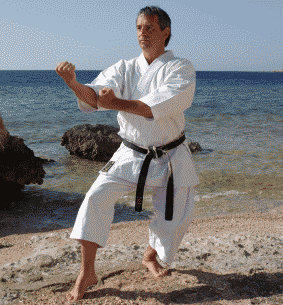
Kosokun Sho
Classification
Shorin-Ryu
Style
Shito Ryu / Shotokan
Level
Advanced
Kosokun
Sho
is
also
a
work
by
Yasutsune
Itosu.
While
it
contains
the
core
techniques
of
Kosokun
Dai,
it
also
has
its
own
unique
characteristics.
The
beginning
of
the
Kata,
with
Morote
Yoko
Uke,
is
very
interesting
and
actually
more
difficult
than
the
beginning
of
Kosokun
Dai.
Furthermore,
the
Kata
also
contains
techniques
from
Itosu's
Rohai
Sandan
and
the
Wanshu
Kata.
The
first
jump
in
the
middle
section,
performed
in
Shotokan's
Kanku
Sho,
is
originally
performed
as
a
body
turn.
However,
this
corresponds
to
the
Kata's
bunkai.
Overall,
Kosokun
Sho
is
a
very
expressive
Kata,
and
although
it
is
shorter
than
Kosokun
Dai,
it
requires
just
as
much
stamina.
Its
difficulty
level
is
somewhat
higher.
Kosokun
Sho
was
the
preferred
Kata
of
Chibana,
a
student
of
Itosu,
whose
version
of
the
Kata,
however,
differs
significantly.
Another
Kata
called
Shihon
Kosokun
is
very
similar
to
Kosokun
Dai,
but
is
performed
in
a
sideways
direction.
According to Kenzo Mabuni, it is a work of his father Kenwa Mabuni.

Meaning of the name
Name of a chinese Master
Moves: 84
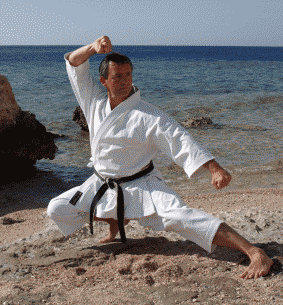
Kushanku
Classification
Shorin-Ryu
Style
Shito Ryu
Level
Advanced
According
to
tradition,
the
Okinawan
Sakugawa
met
the
Chinese
master
Ku
Shan
Ku,
also
known
as
Ko
So
Kun,
who
accepted
him
as
a
student
and
taught
this
Kata.
It
is
unknown
whether
he
is
also
the
creator
of
this
Kata.
Kushanku
is
a
typically
Chinese
Kata.
Very
long,
fast, and with acrobatic moves that require a great deal of agility.
According
to
some
masters,
it
takes
10
years
to
master
this
Kata.
This
applies
not
only
to
the
physical
aspects,
but
especially
to
the
combative
aspects.
Not
only
the
application
of
the
technique,
but
also
the
precise
knowledge
of
when
to
strike
where
is
important.
The
Kata
Kushanku
is
considered
the
most
important
Kata
in
Shuri-te
and
Tomari-te.
It
has
been
adopted,
modified,
and
interpreted
by
many
masters.
Thus,
many
different
versions
of
this
Kata
exist,
such
as
Chatanyara
no
Kushanku,
Sakugawa
no
Kushanku,
Kuniyoshi
no
Kushanku, Chibana no Kushanku, and Itosu no Kushanku.
The
most
authentic
version
is
considered
to
be
the
version
Chatanyara no Kushanku.
All
of
these
Kushanku
versions
are
very
similar,
with
the
exception
of
the
Chibana
no
Kushanku
version,
which
shows
clear
influences
from
Kosokun
Sho.
Itosu
no
Kushanku
is
the
basis
of
the
Kata
Kosokun
Dai
(Kanku
Dai)
and
Kosokun
Sho
(Kanku
Sho).
Shiho
Kosokun
is
also
said
to
be
a
work
by
Itosu,
as
a
kind
of
summary
of
the
main
techniques
of
Kosokun
Dai
and
Kosokun
Sho.
However,
according
to
Kenzo Mabuni, Shiho Kosokun is a work by Kenwa Mabuni.
Various
techniques
allow
Kushanku
to
be
classified
as
belonging
to
the
White
Crane
style.
The
Kata
is
also
sometimes
considered
a
Kata
for
"night
fighting/fighting
in
the
dark,"
although
this
is
doubtful.
The
basis of this theory is the technique of ducking to the ground.
It
is
assumed
that
this
represents
a
kind
of
"emergency
evasive
maneuver"
based
on
the
sounds
of
an
attack
without
being
able
to
actually
see
it
due
to
the
darkness.
Since
this
technique
is
only
practiced
in
Kanku
Dai
and
not
in
any
older
versions,
this
theory
is
unlikely.
Many
Kata
are
mystical.
But
why,
for
the
sake
of
mysticism,
increase
the
mysticism
of
a
mystical
Kata
to
make
it
even
more
mystical?

Meaning of the name
Kings Crown
Moves: 35
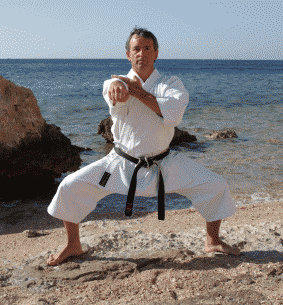
Matsukaze
Classification
Shorei-Ryu
Style
Shito Ryu
Level
Basic
Matsukaze
is
a
very
powerful
and
dynamic
Kata.
Matsukaze
also
means
"neck,"
and
many
of
the
Kata's
techniques
target
the
carotid
artery (the main artery in the neck).
Known
as
Matsukaze
in
Shito-ryu,
the
Kata
is
called
Wankan
in
Shorin-ryu
and
Shotokan.
However,
the
Shotokan
Wankan
differs
greatly from the original version.
Matsukaze
is
a
Kata
in
which
precise
individual
techniques
are
practiced,
followed
by
very
quickly
executed
combinations.
Some
of
its techniques can also be found in Patsai.
Kenwa
Mabuni
adapted
techniques
from
Matsukaze
to
develop
the
Juroku Kata.

Meaning of the name
Sidewise fighting 1
Moves: 27
Naifanchin Shodan
Classification
Shorin-Ryu
Style
Shito Ryu / Shotokan
Level
Medium
Naifanchin
is
an
ancient
Chinese
form.
In
the
original
it
is
very
long
and
the
step
movements
from
Naifanchin
Dachi
to
Kosa
Dachi
are
carried
out
at
a
high
speed
in
the
Chinese
original,
whereas
the
Okinawan
version
practices
them
extremely
slowly.
And
it
is
precisely
this
quick,
lateral
evasion
in
Kosa-Dachi
that
is
an
essential
feature
and
fighting
principle
of
this
Kata.
In
Naifanchin
Shodan
this
is
performed
at
the
beginning
of
the
Kata
in
such
a
way
that
Hiza
Geri
is
also
possible.
A
specialty
of
the
Kata
are
the
Ashi
Barai
techniques
and
the
lateral
Morote
zuki.
Naifanchin
Shodan
is
a
rather
short
Kata.
A
special
feature
of
the
Kata
is
that
all
techniques
are
performed
on
both
the
left
and
right
sides,
training
both
sides
of
the
body
equally.
There
are
many
theories
that
attempt
to
explain
the
purpose
of
the
purely
lateral
line
of
the
Kata.
Some
even
suspect
that
the
Kata
simulates
techniques
on
horseback,
based
on
the
Naifanchin
Dachi
stance
(rider's
stance).
However,
this
seems
doubtful
given
the
forward-facing
(towards
the
horse's
head?)
Ura-Zuki.
Another
theory
is
that
the
Kata
practices
fighting
in
a
confined
space,
with
the
back
to
a
wall
or
a
cliff,
where
the
only
way
out
is
to
move
sideways.
This
corresponds
to
what
is
obviously
practiced
in
the
Kata.
However,
the
fighting
principle
of
the
Kata
does
not
necessarily
have
to
follow
the
training
principle.
This
makes
it
possible
to
perform
the
evasive
movement
not
only
sideways,
but
also
diagonally.
One
can,
so
to
speak,
"run
around"
the
opponent
sideways.
And
by
using
this
form
of
evasion,
the
fighting
techniques
of
the
Kata
are
incredibly
effective, dynamic, and surprising.
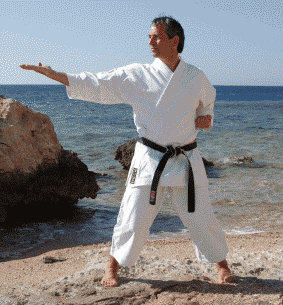

Meaning of the name
Sidewise fighting 2
Moves: 30

Naifanchin Nidan
Classification
Shorin-Ryu
Style
Shito Ryu / Shotokan
Level
Medium
Naifanchin
Nidan
is
somewhat
shorter
than
Shodan;
it
begins
with
a
release
technique
using
empi.
In
a
Chinese
version,
this
may
also
be
the
beginning
of
the
ancient
Naifanchin,
which
first
became
known
in
Naha-te.
In
Shuri-te,
it
reached
Anko
Azato,
who
taught
this
ancient
form
to
Gichin
Funakoshi.
Yasutsune
Itosu
developed
the
Kata
into
the
forms
known
today:
Naifanchin
Shodan,
Nidan,
and
Sanden.
It
is
also
said
that
the
Shodan
and
Nidan
versions
originate
from
Sokon
Matsumura.
The
combination
of
the
three
versions,
however,
is
not
identical
to
the
original
form.
A
special
feature
of
Nidan
is
an
Ashi-
Barai
form,
which
is
practically
equivalent
to
an
Osoto-Gari
from
Judo.
This
throwing
technique
is
extremely
effective
and
very
well
suited
to
close
combat
and
even
competitive
kumite.
In
fact,
the
Naifanchin
Kata
are
of
a
very
high
standard
and
diverse
in
their
combative
content.
Interpreting
it
exclusively
as
"fighting
sideways,
with
your
back
to
the
wall"
is
like
perceiving
only
one
tree
in
the
forest.
Naifanchin
Shodan
was
the
favored
Kata
of
Choki
Motobu,
one
of
Okinawa's
most
famous
fighters.
Regarding
the
original
version,
there is evidence that it was known to Kenei Mabuni.
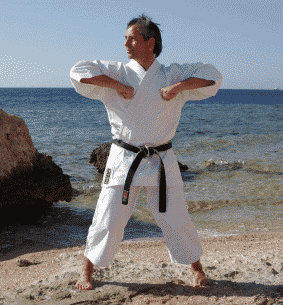

Meaning of the name
Sidewise fighting 3
Moves: 35

Naifanchin Sandan
Classification
Shorin-Ryu
Style
Shito Ryu / Shotokan
Level
Medium
Naifanchin
Sandan
is
the
longest
and
most
demanding
of
the
three
Kata.
It
contains
difficult
technical
combinations.
At
the
beginning
of
the
Kata,
eight
arm
techniques
are
performed
in
rapid
succession,
with
the
stance
(Naifanchin
Dachi)
unchanged.
This,
combined
with
the
required
special
hip
movement,
is
of
a
high
technical
standard.
Another
characteristic
is
the
circular
techniques
that
utilize
the
shoulder
joint
and
generate
considerable
centrifugal
force.
Indeed,
the
three
Naifanchin
Kata
as
a
whole
comprise
a
very
demanding
and
versatile,
complete
fighting
system.
All
that
is
known
about
the
origin
of
the
original
version
is
that
the
Chinese
master
Ason
is
said
to
have
brought
it
to
Naha-te
in
Okinawa.
These
three
Kata
were
adopted
into
Shotokan
virtually
unchanged.
Only
the
Naifanchin
Dachi
stance,
which
is
only
slightly
wider
than
shoulder
width
and
rather
higher,
yet
offers
considerable
stability
and
responsiveness,
was
replaced
by
Kiba-Dachi,
which,
however,
does
not
correspond
to
the
combative
principle of the Kata.
Datenschutzerklärung:
Bei
karatekata.de
handelt
es
sich
um
ein
rein
informatives
Online
Angebot ohne kommerzielle Funktionen.
Alle
hier
veröffentlichten
Publikationen
enthalten
persönliche
Meinungen
des
Autors.
In
Fällen,
in
denen
externe
Informationen
eingebunden
werden,
werden
entsprechende
Quellenangaben
hinzugefügt.
Links
zu
anderen
Internetangeboten
oder
automatische
Weiterleitungen
sind
nicht
implementiert.
Navigation
Kata

DSGVO relevante Cookies sind nicht implementiert.
























































karatekata.de



