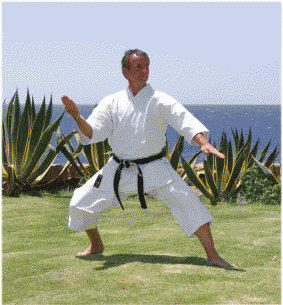
Meaning of the name
54 Steps (big)
Moves: 72

Gojushiho Dai
Classification
Shorin-Ryu
Style
Shotokan
Level
Advanced
The
Gojushiho
Dai
described
here
uses
Shihon
Nukite
in
Zenkutsu
Dachi
and
is
almost
identical
to
the
Gojushiho
practiced
in
Sito-ryu.
Since
in
all
previous
cases
where
a
Dai
and
Sho
variant
was
developed
for
a
Kata,
the
Dai
form
bears
the
closest
resemblance
to
the
originally
practiced
form,
this
also
supports
Master
Hirokazu
Kanazawa's
belief
that
this
is
indeed
Gojushiho
Dai.
Apart
from
rumors,
it
is
unknown
why
the
names
were
swapped.
Since
Hirokazu
Kanazawa
studied
Shotokan
under
the
watchful
eye
of
Gichin
Funakoshi,
his
opinion,
published
in
his
two
Kata
books
,
is
of
great
value.
Since
the
Kata
originally
comes
from
the
Aragaki
school,
where
it
was
called
Useishi,
it
would
actually
be
more
closely
associated
with
Naha-te.
However,
since
its
Kihon
has
been
adapted
to
Shuri-te,
this
would technically no longer be correct.
Superficially,
it
is
not
very
difficult
to
learn
the
Kata,
but
it
takes
a
long time to develop the right dynamics in their techniques.
For more details, see:
Shito Ryu Gojushiho

Meaning of the name
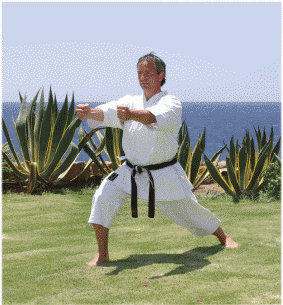
54 Steps (small)
Moves: 73
Gojushiho Sho
Classification
Shorin-Ryu
Style
Shotokan
Level
Advanced
The
Gojushiho
Sho
described
here
uses
Ippon
Nukite
in
Neko
Ashi
Dachi
and
was
also
called
Hotaku
(woodpecker
tapping)
by
Master
Gichin
Funakoshi.
Indeed,
with
the
Ippon
Nukite
techniques,
one
can
imagine
a
woodpecker
striking
a
tree
with
its
beak.
Although
visually
almost
identical
to
Gojushih
Dai,
the
Enbusen
depicted
is
very
different
due
to
the
use
of
Neko
Ashi
Dachi.
It
is
also
the
only
Shotokan Kata in which Washide is practiced.
For more details, see:
Shito Ryu Gojushiho
Rumors:
In
the
1980s,
there
was
a
rumor
that
the
names
of
the
Kata
had
been
swapped after an athlete used the wrong name during a competition.
To
avoid
disqualification,
Shotokan
officials
confirmed
the
veracity
and
maintained
the
name
swap.
The
source
of
the
rumor
is
unknown,
so it should be viewed with caution.
However,
each
style
has
the
right
to
its
own
interpretation
of
karate,
which
includes
the
choice
of
Kata,
its
modification,
and
the
assignment of names.
More on the topic of names:
siehe Gojushiho Dai

Meaning of the name
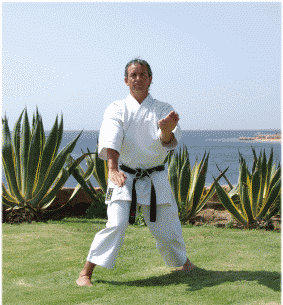
Half moon
Moves: 44

Hangetsu
Classification
Shorin-Ryu
Style
Shotokan
Level
Advanced
Hangetsu
corresponds
to
the
Seishan
from
Shuri-te,
which,
however,
bears
only
a
certain
resemblance
to
the
Seisun
from
Naha-te,
which
leads
to
confusion.
In
Hangetsu,
only
the
middle
section,
with
the
turns
while
standing
on
one
leg,
was
changed.
However,
in
Shotokan,
it
is
the
only
Kata
with
a
distinctive
breathing
technique,
reminiscent
of
the
breathing
technique
of
the
Naha-te
Kata.
The
name
Hangetsu
refers
to
the
special
stance
(Hangetsu
Dachi
/
Crescent
Stance)
taught
in
the
Kata.
It
is
a
very
powerful
stance
capable
of
breaking
balance.
Due
to
its
special
properties,
Hangetsu
can
be
considered
one of the most valuable Kata in Shotokan.
For more details, see:
Seishan

Meaning of the name
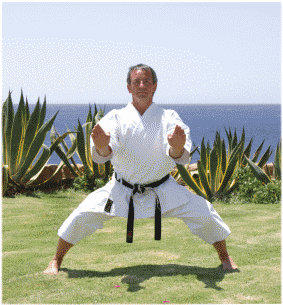
Cleaning the Mirror
Moves: 37
Meikyo
Classification
Shorin-Ryu
Style
Shotokan
Level
Medium
The
Kata
Meikyo
is
often
referred
to
as
the
Shotokan
version
of
Rohai.
The
very
similar
initial
movement
of
the
two
Kata
is
considered
to be the basis for this.
Otherwise,
Meikyo
bears
no
resemblance
to
Rohai.
What
is
certain
is
that
Yasutsune
Itosu,
as
a
student
of
Matsumura,
learned
his
Rohai.
From
this,
Itosu
developed
the
Rohai
Shodan,
which
is
considerably
shorter
than
the
original.
He
also
developed
Rohai
Nidan
and
Rohai
Sandan.
In
contrast
to
the
Naifanchin
Kata,
which
was
divided
into
three
parts,
Itosu
created
two
completely
new
Rohai
Kata
here
that
are
hardly
comparable
to
Rohai
and
Rohai
Shodan.
If
you
look
at
the
characteristics
of
the
three
Itosu
Kata
Rohai
Shodan,
Nidan,
and
Sandan,
you
will
find
all
the
techniques
and
concepts
of
the
Kata
Meikyo.
Therefore,
I
would
argue
that
these
three
Rohai
Kata
are
closely
related
to
the
Meikyo
Kata,
and
that
Meikyo
is
a
kind
of
summary.
However,
Meikyo
lacks
the
Sagi
Ashi
Dachi
technique
so
typical
of
Rohai.
Furthermore,
Meikyo
contains
a
special
jumping
technique
with
Sankaku
Tobi.
This
jump
uses
a
special
torque,
making
it
possible
to
actually
jump
in
a
slight
arc.
This
also
allows
for
the
use
of a very effective throwing technique at the end of the jump.
Ultimately,
it
is
unknown
who
created
the
Kata
Meikyo.
However,
it
is
very
likely
that
it
was
developed
in
Shotokan,
based
on
contacts
with
the
Shito-ryu
school
of
Kenwa
Mabuni
and
the
associated
knowledge
of
Itosu's
three
Rohai
versions.
Yoshitaka
Funakoshi,
therefore,
could
be considered a candidate for the development of the Meikyo.
For more details, see:
Rohai Shodan
Rohai Nidan
Rohai Sandan
Note:
There
is
no
evidence
that
the
Kata
Meikyo
Nidan
and
Meikyo
Sandan,
which
emerged
in
the
1990s,
are
historical
Kata,
especially
since
Meikyo
itself
cannot
fulfill
this
claim.
There
is
evidence
that
Nidan
and
Sandan
can
be
traced
back
to
Tetsuhiko
Asai.
I
met
Asai
personally
in
2002, and had a very interesting conversation with him over dinner.

Meaning of the name
24 steps
Moves: 38
Nijushiho
Classification
Shorin-Ryu
Style
Shotokan
Level
Advanced
Nijushiho
developed
from
Niseishi
and
entered
Shotokan
through
its
connection
to
Kenwa
Mabuni.
The
only
changes
were
the
stances
and
the
type
of
lateral
attacks
with
Tate
Empi.
For
example,
the
Yori
Ashi
movement
in
Kiba
Dachi
is
missing
from
the
original.
Foot
techniques
are
also
performed
with
Mae
Geri.
The
use
of
Yoko-geri,
however,
dates
back
to
Tetsuhiko
Asai.
According
to
Shotokan
masters,
the
Kata
should
be
performed
without
pause.
There
is
no
stopping;
the
techniques
flow
into
one
another,
like
a
baton
being
passed
from
one
runner to another. One could also say it is like flowing water.
For more details, see:
Niseishi
Meaning of the name
Calm power
Moves: 42
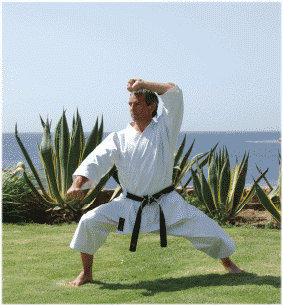
Sochin
Classification
Shorin-Ryu
Style
Shotokan
Level
Advanced
Shotokan
Sochin
is
a
new
Kata
developed
by
Yoshitaka
Funakoshi
and
bears
no
resemblance
to
the
Aragaki
School's
Sochin.
It
is
therefore
considered
a
new,
independent
Kata.
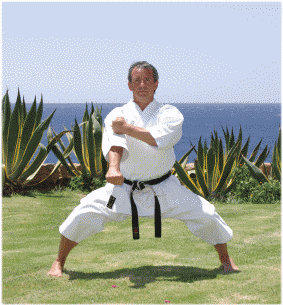
Sochin
teaches
a
powerful
fighting
style
with
aggressive,
forward-facing
techniques.
The
execution
of
Nihon
zuki
in
Fudo
Dachi
involves
very
difficult
hip
movement.
The
Kata
also
requires
good
balance,
especially
during
turns,
especially
the
Yoko
Geri,
which
is
performed
while
turning.
It
also places considerable demands on the leg muscles.
Meaning of the name
Clouds storm
Moves: 58
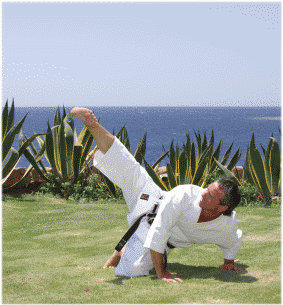
Unsu
Classification
Shorin-Ryu
Style
Shotokan
Level
Advanced
Unsu
was
significantly
modified
in
Shotokan.
Many
techniques
and
combinations
were
redesigned.
For
example,
the
Ushiro
Geri
was
replaced
with
a
forward-executed
Mawashi
Geri.
Many
technical
refinements
were
exchanged
for
more
straightforward
techniques.
Furthermore,
the
kata
was
somewhat
shortened.
The
dynamics
were
also
changed,
favoring
a
greater
use
of
force.
At
higher
levels,
however,
the
kata
should
be
performed
with
a
similar
fluidity
to
Nijushiho.
For more details, see:
Shito Ryu Unshu
Meaning of the name
Kings Crown
Moves: 28
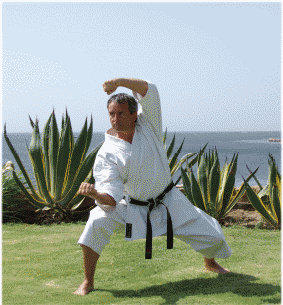
Wankan
Classification
Shorin-Ryu
Style
Shotokan
Level
Medium
The
Wankan
originated
from
the
Matsukaze
Kata.
However,
it
is
considerably
shorter,
and
some
technical
combinations
have
been
replaced
with
entirely
new
ones.
At
least
it's
still
clearly
recognizable
that the Kata originated from Matsukaze.
However,
the
changes
are
so
extensive
that
one
could
even
call
it
a
new
Kata.
And
although
the
Kata
is
very
short,
it
contains
a
fairly
complex
fighting
system.
Some
of
its
techniques,
such
as
the
Ashi
Barai
at
the
beginning
of
the
Kata,
are
only
practiced
in
a
sketchy
way.
For more details, see:
Matsukaze
Datenschutzerklärung:
Bei
karatekata.de
handelt
es
sich
um
ein
rein
informatives
Online
Angebot ohne kommerzielle Funktionen.
Alle
hier
veröffentlichten
Publikationen
enthalten
persönliche
Meinungen
des
Autors.
In
Fällen,
in
denen
externe
Informationen
eingebunden
werden,
werden
entsprechende
Quellenangaben
hinzugefügt.
Links
zu
anderen
Internetangeboten
oder
automatische
Weiterleitungen
sind
nicht
implementiert.
Navigation
Kata
DSGVO relevante Cookies sind nicht implementiert.










































karatekata.de


