Meaning of the name
Basic Kata 1
Moves: 24

Kihon Kata Ichi
Classification
Shorei-Ryu
Style
Shito Ryu
Level
Basic
Taikyoku
Kata
of
Shotokan
or
Goju-ryu.
Kihon
Kata
Ichi
is
very
similar
to
the
Taikyoku
Shodan
of
Shotokan.
However,
the
Uke
techniques
of
the
Kihon
Kata
are
performed
in
Neko
Ashi
Dachi,
with
Yoko
Uke
(Uchi
Uke)
being
the
fundamental
technique
of
all
Kihon
Kata.
An
alternative name is Dai Dosa.

Meaning of the name
Basic Kata 2
Moves: 30
Kihon Kata Ni
Classification
Shorei-Ryu
Style
Shito Ryu
Level
Basic
Kihon Kata Ni follows the concept of Kihon Kata Ichi.
Instead
of
Neko
Ashi
Dachi,
Zenkutsu
Dachi
is
used,
and
after
each
Yoko Uke, a Mae Geri is additionally performed.

Meaning of the name
Basic Kata 3
Moves: 30

Kihon Kata San
Classification
Shorei-Ryu
Style
Shito Ryu
Level
Basic
Kihon Kata San follows the concept of Kihon Kata Ichi.
Instead
of
Neko
Ashi
Dachi,
Zenkutsu
Dachi
is
used,
and
Gedan
Barai
is performed before each Yoko Uke.
Meaning of the name
Basic Kata 4
Moves: 30
Kihon Kata Yon
Classification
Shorei-Ryu
Style
Shito Ryu
Level
Basic
Kihon Kata Yon follows the concept of Kihon Kata Ichi.
Instead
of
Neko
Ashi
Dachi,
Zenkutsu
Dachi
is
used,
and
after
each
Yoko Uke, Jodan Uke is performed.

Meaning of the name
Kata of the sky
Moves: 24
Ten no Kata
Classification
Shorei-Ryu
Style
Shito Ryu
Level
Basic
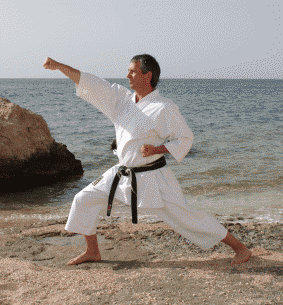
The
Fukyu
Kata
were
created
to
teach
beginners
in
karate.
Two
Kata
were
created.
Shoshin
Nagamine
is
the
founder
of
Fukyu
Kata
Ichi
and
it
is
representative
of
Shorin-ryu
karate.
In
some
schools,
it
is
called
Ten
no
Kata,
which
means
Kata
of
Heaven.
The
entire
Kata
is
practiced
in
Zenkutsu
Dachi
and
Hanzenkutsu
Dachi.
The
Kata
is
simply
structured
and
reminiscent
of
the
Taikyoku
Shodan
from
Shotokan.
However,
with
Oi
zuki
Jodan
and
Gyaku
zuki,
it
contains
more
diverse
techniques
than
the
Taikyoku
Kata.
Nevertheless,
it
is
easier
to
learn
than,
for
example,
the
Heian
Shodan
of
Shotokan.
Another
great
advantage
is
that
all
techniques
are
performed
with
both
the
right
and
left
sides.
This
trains
both
sides
of
the
body
equally,
which
is
very
important
at
the
beginning
of
karate
training
and
especially
for
children.
Meaning of the name
Kata of the Earth
Moves: 26
Chi no Kata
Classification
Shorei-Ryu
Style
Shito Ryu
Level
Basic
Chojun
Miyagi,
the
founder
of
Goju-ryu,
developed
the
two
Kata
Gekisai
Dai
Itchi
and
Gekisai
Dai
Ni
around
1940.
The
Gekisai
Dai
Ichi
is
identical
to
the
Fukyu
Kata
Ni,
thus
completing
the
Fukyu
Kata
system.
His
Kata
represents
the
Shorei-ryu
or
Naha-te
school.
However,
the
Kata
is
not
a
typical
Shorei
Kata,
but
rather
a
kind
of
link
between
Shorei
and
Shorin.
The
Fukyu
Kata
Ni
is
also
known
as
Chi
no
Kata,
which
means
"Kata
of
the
Earth."
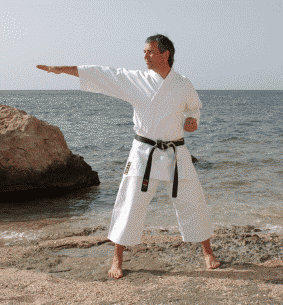
It
contains
frequent
alternations
between
high
and
low
techniques,
allowing
for
quite
demanding
and
versatile
bunkai.
In
this
Fukyu
Kata,
too,
all
techniques are performed equally on the left and right hand.
The
Fukyu
Kata
are
therefore
of
great
importance
in
basic
physical
training.
However,
their
value
is
often
underestimated.
Both
Kata
also
demonstrate
the
extensive,
physiologically
profound,
and
valuable
considerations
of
the
two
masters,
Shoshin
Nagamine
and
Chojun
Miyagi,
in
developing
these
Katas.
By
no
means
did
they
simply
design
a
basic
Kata,
but
rather
carefully
considered
the
form
the
Kata
should take to achieve the desired effect.
Meaning of the name
Peaceful Mind 1
Moves: 31
Heian Shodan (Pinan Shodan)
Classification
Shorei-Ryu
Style
Shito Ryu
Level
Basic
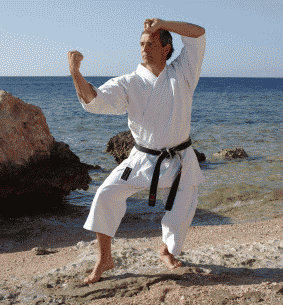
Officially,
the
Heian
Kata
were
developed
by
Yasutsune
Itosu
to
teach
karate
to
the
public
in
elementary
schools.
However,
there
are
also
claims
that
the
Heian
Shodan
and
Heian
Nidan
originated
from
Sokon
Matsumura.
In
fact,
the
Matsumura
school
on
Okinawa
only
practiced
Heian
Shodan
and
Nidan.
This
means
that
there
were
originally
only
two
Heian
Kata.
It
is
also
said
that
the
Heian
Nidan
was
developed
because
the
Heian
Shodan
was
ultimately
deemed
too
difficult
for
the
beginning
of
karate
lessons.
After
all,
karate
was
to
be
taught
in
groups
and
school
classes
and
not
in
the
otherwise
typical
one-on-
one
lessons,
where
the
difficulty
of
the
Kata
was
not
important.
What
is
certain,
however,
is
that
the
Heian
Kata
are
not
exclusively
based
on
the
Kushanku
or
Kosokun
Dai
(Kanku
Dai).
Many
techniques
originate
from
other
Kata.
For
example,
the
first
technique
of
the
Heian
Shodan
can
be
found
in
the
old
Chinto.
The
complete
combination
at
the
beginning
of
the
Kata,
however,
is
reminiscent
of
a
Sochin
technique
from
the
Aragaki
school.
In
fact,
only
the
end
of
the
Shotokan
version
of
Heian
Shodan,
with
the
Shuto
Uke,
can
be
attributed to Kushanku.
In
earlier
times,
the
Heian
Kata
were
called
Pinan,
but
this
is
simply
the Okinawan term for "peaceful mind."

Meaning of the name
Peaceful Mind 2
Moves: 25
Heian Nidan (Pinan Nidan)
Classification
Shorei-Ryu
Style
Shito Ryu
Level
Basic
The
Heian
Nidan
is
a
much
more
fundamental
Kata
than
the
first-
created
Heian
Shodan.
It
contains
only
individual
techniques,
is
shorter,
and
easier
to
learn.
It
is
therefore
more
suitable
for
teaching
at
the
beginning
of
karate
studies.
In
Shito-ryu
schools,
it
is
taught
before the Heian Shodan.
In
Shotokan,
however,
the
names
of
the
two
Heian
Kata
were
reversed,
so
that
the
original
Heian
Shodan
became
the
Heian
Nidan,
and
the
historical
and
simpler
Heian
Nidan
became
the
Heian
Shodan.
This
repeatedly
leads
to
confusion.
In
Shotokan,
however,
almost
all
of the old Kata have been modified and some have been renamed.
Although
the
Heian
Nidan
appears
to
be
a
very
simple
Kata
at
first
glance,
it
actually
contains
very
sophisticated
techniques.
The
bunkai
is
by
no
means
so
simple,
and
some
techniques
can
only
be
performed
with
excellent
timing
and
correct
physical
application.
The
beginning
of
the
Kata
is
reminiscent
of
the
beginning
of
the
Kata
Chinte.
However,
this
is
no
longer
included
in
the
Shotokan
equivalent
of the Kata, the Heian Shodan.
Meaning of the name
Peaceful Mind 3
Moves: 28
Heian Sandan (Pinan Sandan)
Classification
Shorei-Ryu
Style
Shito Ryu
Level
Basic
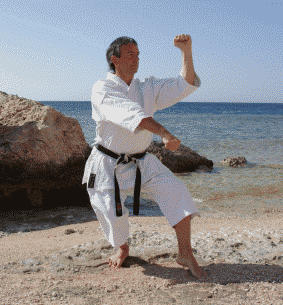
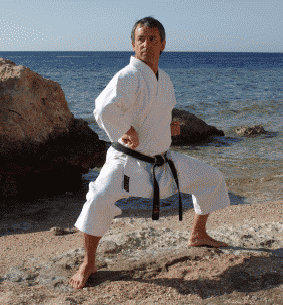
Empi-Uke
can
be
found
in
Gojushiho
and
Chinto,
where
it
is
practiced
in
Heiko-Dachi
without
the
subsequent
Uraken.
However,
the
techniques
at
the
end
of
the
Kata,
with
Ushiro-Empi,
are
reminiscent
of
the
Naha-te
Kata
Seienchin!
The
Fumikomi
technique
only
exists
in
the Shotokan version.
Meaning of the name
Peaceful Mind 4
Moves: 32
Heian Yondan (Pinan Yondan)
Classification
Shorei-Ryu
Style
Shito Ryu
Level
Basic
Only
Heian
Yondan
shows
a
clear
relationship
to
Kushanku.
The
Hiza-
Geri
technique
near
the
end,
however,
can
also
be
found
in
a
similar
form in the Chinte Kata.
Heian
Yondan
is
the
first
of
the
Heian
Kata
to
feature
deliberately
slow
techniques.
It
also
contains
many
two-handed
techniques.
These
are
less
to
be
seen
as
blocking
techniques
and
more
as
lever
or
throwing techniques.
Unlike
Heian
Sandan,
which
teaches
release
techniques
from
holds
or
clasps,
Heian
Yondan
teaches
the
application
of
corresponding
holds,
clasps,
or
throws.
The
Kata
is
also
very
dynamic
with
a
forward-
facing
fighting
style.
It
has
a
consistently
offensive
character
and
also
teaches
attacks
from
a
distance.
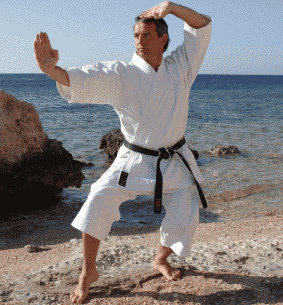
The
Empi
Uchi,
which
follows
the
Mae
Geri
(Yoko
Geri
in
Shotokan),
is
a
very
dangerous
and
destructive
technique.
It
follows
the
same
principle
as
the
Zukis
in
Chinte,
where
one
hand
is
placed
on
the
back
of
the
target
to
be
hit,
which
prevents
evasion
or
retreat
and
thus
potentiates
the
effect
of
the technique.
Meaning of the name
Peaceful Mind 5
Moves: 32
Heian Godan (Pinan Godan)
Classification
Shorei-Ryu
Style
Shito Ryu
Level
Basic
The
Heian
Kata
series
concludes
with
the
Heian
Godan.
It
contains
techniques
from
Tomari
Chinto
and
Patsai
and
is
a
very
dynamic
and
versatile
Kata.
It
contains
many
techniques
that
work
with
the
body's
torque.
When
performed
correctly,
these
develop
very
high
levels
of
power.
One
of
the
fundamental
secrets
of
karate
is
the
generation
of
high
power
through
correct
physical
application.
The
expenditure
of
muscle
power
is
relatively
low.
Nevertheless,
a
surprisingly
high
level
of
force
is
generated,
which
is
why
the
ancient
masters
were
considered
physically
very
strong.
The
biomechanically
correct
execution
of
the
technique
must
therefore
be
the
primary
goal
when
practicing
the
Kata.
Timing
and
speed
of
the
technique
are
also
extremely important.
A
technique
only
has
optimal
effect
when
executed
at
the
right
time.
When
using
throwing
techniques,
the
speed
of
the
technique
is
of
fundamental
importance.
Once
this
speed
has
been
mastered,
in
combination
with
the
correct
physical
application,
throwing
techniques
become
surprisingly
simple.
Heian
Godan
incorporates
many
of
these
special
aspects
of
karate.
However,
the
realistic
application
of
kata
techniques
must
be
understood
in
order
to
truly
practice
them
with
the
correct
application.
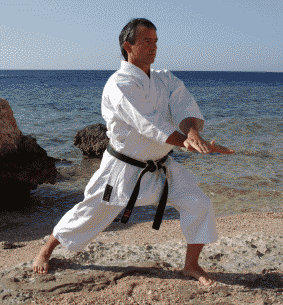
A
purely
athletic,
fast
execution
of
kata
does
not
do
justice
to
this
and
hinders
the
development of masterful technique.
Datenschutzerklärung:
Bei
karatekata.de
handelt
es
sich
um
ein
rein
informatives
Online
Angebot ohne kommerzielle Funktionen.
Alle
hier
veröffentlichten
Publikationen
enthalten
persönliche
Meinungen
des
Autors.
In
Fällen,
in
denen
externe
Informationen
eingebunden
werden,
werden
entsprechende
Quellenangaben
hinzugefügt.
Links
zu
anderen
Internetangeboten
oder
automatische
Weiterleitungen
sind
nicht
implementiert.
Navigation
Kata

DSGVO relevante Cookies sind nicht implementiert.
































































karatekata.de



