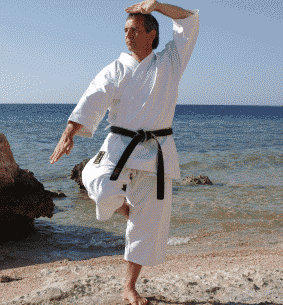
Meaning of the name
Vision of a White Crane
Moves: 45

Matsumora Rohai
Classification
Shorin-Ryu
Style
Shito Ryu
Level
Medium
The
Rohai
Kata
is
equally
well-known
in
the
Matsumora
(Tomari)
and
Matsumura
(Shuri)
schools.
It
originates
from
the
White
Crane
style,
but
is
less
dynamic
and
combative
than
Chinto,
and
not
as
"foreign"
and
mysterious
as
Hakutsuru,
Hakkaku,
or
Haufa.
The
Kata
exudes
elegance
and
dignity,
and
it
is
very
difficult
to
find
the
right
balance
between calm and dynamism.
It
contains
Shuto-Barai
in
Sagi
Ashi
Dachi,
a
very
elegant
evasive
movement followed by a devastating counterattack.
Rohai is also very suitable for practicing balance.
The
Meikyo
Kata
is
often
referred
to
as
the
Shotokan
version
of
Rohai.
The
basis
for
this
is
the
initial
movement,
which
is
very
similar
in
both
Kata.
In
fact,
Meikyo
otherwise
bears
no
similarity,
either
conceptually or technically, to the traditional Rohai.

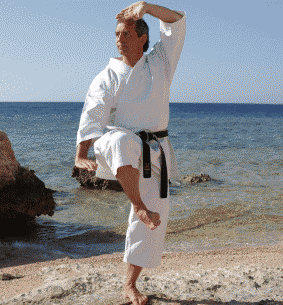
Meaning of the name
Vision of a White Crane
Moves: 41

Matsumura Rohai
Classification
Shorin-Ryu
Style
Shito Ryu
Level
Medium
The
Masumura
Rohai
is
essentially
the
same
as
the
Matsumora
Rohai.
Both
versions
are
almost
identical,
although
the
Matsumura
school
uses
a
somewhat
more
direct
execution
of
the
techniques,
sometimes
using different stances and with greater overall dynamics.
Regarding
the
beginning
of
the
Kata,
there
are
two
different
versions,
one of which contains an additional combination of three techniques.
Therefore,
the
exact
number
of
techniques
and
movements
in
traditional Kata cannot always be determined with certainty.
Thus,
Sokon
Matsumura
not
only
modified
the
Rohai
in
terms
of
sequence
and
number
of
techniques
compared
to
the
Rohai,
but
also
increased
the
internal
dynamics
while
maintaining
the
principles
of
the Crane School.
In
terms
of
character,
the
Rohai
could
be
described
as
having
the
appearance
of
a
sublime,
superior
crane,
whereas
the
Matsumura
Rohai is seen as an extremely agile and determined crane.

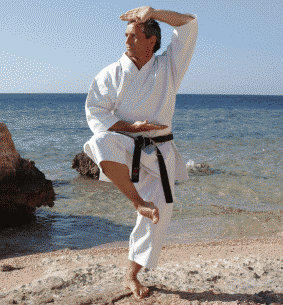
Meaning of the name
Vision of a White Crane 1
Moves: 21
Rohai Shodan
Classification
Shorin-Ryu
Style
Shito Ryu
Level
Medium
Yasutsune
Itosu
created
the
Rohai
Shodan
version
based
on
the
Rohai
Kata.
Also
known
as
Itosu
no
Rohai
Shodan,
this
Rohai
form
is
similar
to
the
Matsumura
Rohai
at
the
beginning.
However,
it
subsequently
follows
a
purely
lateral
enbusen
and
also
shows
significant
differences
in
the
techniques
used.
The
Ashi
Barai
techniques
it
contains
are
complex
and
require
precise
body
movement
with
targeted
shifting
of
body
weight.
The
Kata
is
extremely
short,
yet
interesting,
varied,
and
not without elegance in its execution.

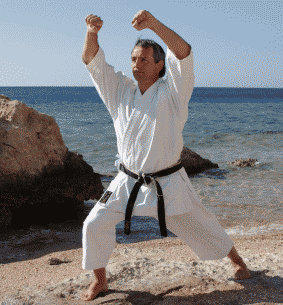
Meaning of the name
Vision of a White Crane 2
Moves: 51
Rohai Nidan
Classification
Shorin-Ryu
Style
Shito Ryu
Level
Medium
Unlike
the
usual
Rohai
Kata,
the
Rohai
Nidan
does
not
contain
any
of
the
distinctive
features
of
the
ancient
Rohai.
Techniques
performed
while
standing
on
one
leg
are
completely
absent.
The
Kata
is
significantly longer than Rohai, or Rohai Shodan, and Rohai Sandan.
Some
techniques,
such
as
Shuto
Uke
in
Kosa
Dachi,
are
performed
repeatedly
and
in
a
total
of
four
directions.
Analyzing
this
part
of
the
Kata,
one
ultimately
recognizes
a
mirror-image
concept.
In
fact,
the
Rohai
Nidan
Kata
is
the
foundation
Kata
for
the
development
of
Meikyo.
Meaning of the name
Vision of a White Crane 3
Moves: 40
Rohai Sandan
Classification
Shorin-Ryu
Style
Shito Ryu
Level
Medium
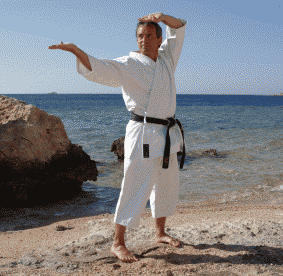
Rohai
Sandan
also
does
not
use
typical
techniques
of
the
old
Rohai.
It
is
shorter
than
Rohai
Nidan,
but
significantly
longer
than
Rohai
Shodan.
It
is
also
not
very
widely
practiced.
However,
the
Sukui
Uke
technique
was
incorporated
into
the
development
of
the
Shotokan
Kata Meikyo.
Rohai
Sandan
contains
techniques
that
can
also
be
found
in
Kosokun
Sho.
It
is
now
open
to
speculation
whether
Itosu
first
developed
Rohai Sandan or Kosokun Sho.
Some
techniques
utilize
the
centrifugal
force
of
the
shoulder
joint
and
are
reminiscent
of
the
Kata
Chinte.
Furthermore,
the
beginning
of
the
Kata
follows
a
similar
concept
to
the
beginning
of
the
Matsumura
Rohai and is very dynamic.
Meaning of the name
Thirteen
Moves: 56
Seishan
Classification
Shorin-Ryu
Style
Shito Ryu
Level
Medium
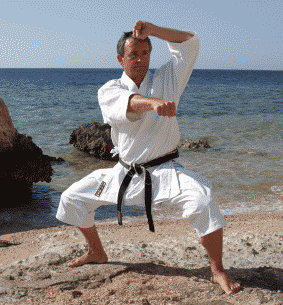
Seishan
is
primarily
practiced
and
passed
down
in
the
school
of
Sokon Matsumura.
Hangetsu was developed in Shotokan based on this Kata.
Only
the
beginning
is
reminiscent
of
the
Naha-te/Goju
Ryu
(Shorei-
Ryu) Kata Seisan.
The
main
body
of
the
Kata
follows
the
concept
and
technical
combinations of Aragaki Seisan.
Therefore,
it
is
difficult
to
imagine
that
Seishan
is
merely
a
version
of
the Goju Ryu Seisan. Rather, it appears as an independent Kata.
Meaning of the name
Name of a chinese Master
Moves: 32
Wanshu
Classification
Shorin-Ryu
Style
Shito Ryu
Level
Medium
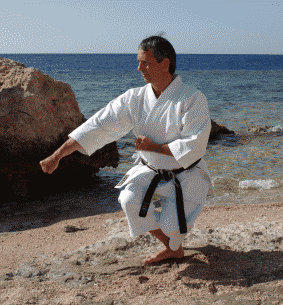
It
is
believed
that
this
Kata
came
to
Okinawa
in
the
16th
century
via
a Chinese master named Wang Ji.
Two
very
different
versions
of
Wanshu
exist.
The
form
known
as
Tomari
Wanshu
bears
the
greatest
resemblance
to
the
Shotokan
Kata
Empi.
The
initial
movement
of
Wanshu,
however,
is
identical
to
that
of
Chinte.
And
like
Chinte,
Wanshu
is
a
unique
Kata,
representing
a
distinctive
feature of the Shorin-ryu Kata concept.
This
could
mean
that
Wanshu
and
Chinte
are
actually
very
old
Kata,
possibly
even
belonging
to
the
same
school.
Wanshu
teaches
techniques
of
close
combat
and
hidden
fists,
unusual
in
Shorin-ryu.
Both
versions
include
throwing
techniques
and
attacks
to
the
opponent's
lower
body
(groin,
knee).
The
footwork
is
complicated,
unusual, and very difficult to master.
Meaning of the name
Name of a chinese Master
Moves: 40
Tomari Wanshu
Classification
Shorin-Ryu
Style
Shito Ryu
Level
Medium
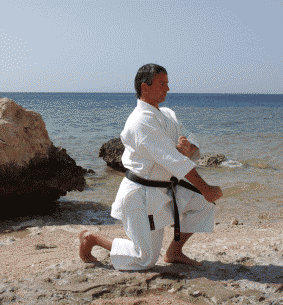
Tomari
Wanshu
is
very
different
from
Wanshu.
So
much
so,
in
fact,
that one could say they are two different Kata.
The
beginning
of
Tomari
Wanshu
is
almost
identical
to
the
opening
movement
of
the
Jion
Kata.
There
is
no
connection
to
Chinte,
as
there
is
with
Wanshu.
Empi
was
developed
from
Tomari
Wanshu
in
Shotokan.
Both
Kata
are
still
very
similar.
Tomari
Wanshu
teaches
very
effective
close
combat
techniques
that
include
many
throws.
Age
zuki
also
includes
a
special,
hidden
form
of
tsuki.
Some
passages
of
the
Kata
also
bear
strong
resemblance
to
other
ancient
Kata
such
as
Patsai and Rohai.
Datenschutzerklärung:
Bei
karatekata.de
handelt
es
sich
um
ein
rein
informatives
Online
Angebot ohne kommerzielle Funktionen.
Alle
hier
veröffentlichten
Publikationen
enthalten
persönliche
Meinungen
des
Autors.
In
Fällen,
in
denen
externe
Informationen
eingebunden
werden,
werden
entsprechende
Quellenangaben
hinzugefügt.
Links
zu
anderen
Internetangeboten
oder
automatische
Weiterleitungen
sind
nicht
implementiert.
Navigation
Kata

DSGVO relevante Cookies sind nicht implementiert.






















































karatekata.de



