Meaning of the name
28 steps
Moves: 64

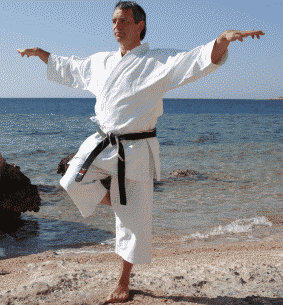
Nipaipo
Classification
Shorei-Ryu
Style
Shito Ryu
Level
Medium
Nipaipo
is
a
high-level
Kata
with
very
demanding
techniques
and,
at
times, extremely fast combinations.
The
Kata
was
brought
to
Okinawa
by
Go
Kenki
and
entered
Shito-ryu
via
Kenwa
Mabuni.
Nipaipo
places
high
demands
on
coordination
and
balance.
It
includes
powerful
attacks
on
vital
points
using
Nukite
and
Ippon-Ken,
as
well
as
throwing
and
locking
techniques.
Nipaipo
has
very
fine
techniques,
and
evasive
maneuvers
are
often
practiced
by
"turning"
the
body
away.
This
requires
sophisticated
body
control.
As
with
many
ancient
Kata,
the
technical
peculiarities
are
not
overtly
apparent,
but
are
essential
for
the
correct
execution
of
the
Kata.
Especially
the
turns,
which
involve
a
throwing
technique,
require
very
precise
work
of
the
hips
and
especially
the
ankles.
Learning
this
correctly,
however,
requires
a
precise
knowledge
of
the
Kata's
bunkai.
Nipaipo
contains
almost
exclusively
techniques
of
a
high
degree
of
difficulty
with
many
special
details
in
the
area
of
biomechanics.
This
makes
Nipaipo
one
of
the
most
difficult
Kata
in
karate.
Unfortunately,
it
is
often
learned
only
superficially.
It
seems
as
if
the
goal
of
gaining
a
deep
understanding
of
the
principles
of
a
Kata
is
no
longer
as
strong as it once was in Okinawa.

Meaning of the name
Moves: 33
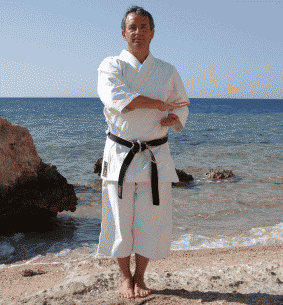
Hakkaku
Classification
Shorei-Ryu
Style
Shito Ryu
Level
Advanced
In
terms
of
concept,
structure
and
execution
of
the
techniques,
Hakkaku
is
very
similar
to
Haufa,
Hakutsuru
and
especially
Hakucho.
The
first
half
of
the
Kata
is
very
calm,
flowing
and
very
elegant
at
a
fairly
slow
tempo.
At
the
end,
however,
techniques
are
executed
at
such
a
speed
that
no
details
are
visible.
Hakkaku
thus
symbolises
almost
perfectly
the
crane
wading
through
shallow
water
in
search
of
food.
This
is
also
fitting
because
the
Kata
only
goes
straight
forward,
over
a
distance
of
around
6
metres.
In
competitions,
it
would
therefore
end
directly
in
front
of
the
referee's
chair
and
with
the
last
technique
(Soe-Uke
in
Neko-Ashi-Dachi)
you
could
touch
his
nose.
The
origin
of
the
Kata
is
unknown.
Its
similarity
to
a
version
of
Hakucho
could
mean
that
Hakkaku
developed
from
it.
It
is
also
possible
that
it
originated
from
the
Matsumura
school,
in
which
several White Crane Kata were practiced.
Although
Hakkaku
clearly
belongs
to
the
White
Crane
style
(Bay
he
Quan),
also
known
as
Hakutsuru-Ken
(Crane
Fist),
it
is
not
identical
to
the
Hakutsuru
Kata.
The
first
half
of
a
version
of
the
Paiho
Kata
demonstrated
by
Sakumoto
is
very
similar
to
Hakkaku.
The
fact
that
Teruo
Hayashi,
the
founder
of
Hayashi
ha
Shito
Ryu,
studied
Ryuei
Ryu
could
mean
that
Hakkaku
is
the
first
part
of
a
version
of
Paiho.
Or
that
the
Paiho
demonstrated
by
Sakumoto
was
further
developed
from Hakkaku.
Meaning of the name
Onehundred Birds
Moves: 30
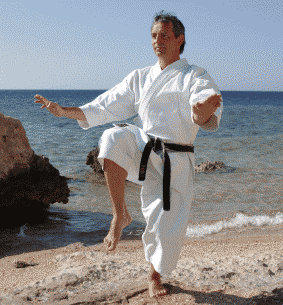
Hakucho
Classification
Shorei-Ryu
Style
Shito Ryu
Level
Advanced
This
Hakucho
is
so
similar
to
the
Hakkaku
Kata
that
it
could
also
be
called
Hakkaku
Sho.
However,
it
lacks
the
variety
of
Hakkaku
and
the
dynamism
of
Haufa.
It
is
a
rather
calm
Kata
without
any
particular
technical
demands,
placing
great
emphasis
on
elegance
and
breathing.
Although
the
Kata
does
not
present
any
particular
difficulties
and
could
potentially
be
a
very
good
Kata
for
learning
the
Crane
School,
its
techniques
are
by
no
means
as
calm
and
harmless
as
the
Kata
itself appears.
Meaning of the name
Moves: 39

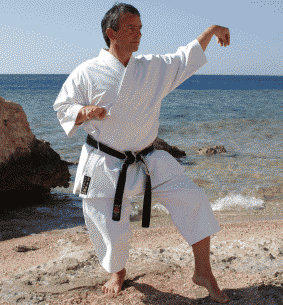
Hakufa
Classification
Shorei-Ryu
Style
Shito Ryu
Level
Advanced
The
Hakufa
Kata
originates
directly
from
China
and
was
brought
to
Okinawa
by
Chojun
Miyagi.
It
is
still
a
component
of
Okinawan
Goju-
ryu
today.
The
beginning
of
the
Kata
is
reminiscent
of
the
Tensho
Kata.
Hakufa
also
practices
circular
open-hand
techniques,
as
well
as
various
washide
(crane's
beak)
techniques.
This
special
fist
form
of
washide
is
a
key
feature
of
this
Kata.
In
the
second
part
of
the
Kata,
washide/koken is practiced ten times in different ways.
Hakufa
is
a
very
interesting
Kata.
Many
of
its
techniques
are
performed
slowly
and
very
smoothly,
which
gives
the
Kata
a
particularly sublime character.
Meaning of the name
White Crane
Moves: 114

Hakutsuru
Classification
Shorei-Ryu
Style
Shito Ryu
Level
Advanced
Hakutsuru
is
considered
the
most
mysterious
and
arguably
the
most
important
of
all
Okinawan
Kata.
It
was
kept
secret
well
into
the
20th
century
and
passed
on
to
only
a
few
students.
There
are
now
many
Kata
with
the
name
Hakutsuru.
The
Kata
Hakkaku
and
Haufa
are
sometimes
also
considered
Hakutsuru.
However,
both
Hakkaku
and
Haufa
are
completely
different
Kata
and
only
have
a
certain
technical
similarity
to
the
old
Hakutsuru.
However,
there
are
probably
different
interpretations
of
the
original
Kata
Hakutsuru,
which
was
known
in
both Shorei (Naha-te) and Shorin (Shuri-te & Tomari-te). Higashionna
is
said
to
have
known
it,
as
was
Matsumura.
It
is
certain
that
a
form
of
Hakutsuru
was
known
in
Kunemura,
a
settlement
of
Chinese
envoys.
This
version
is
called
Hakutsuru
no
Kunemura
and
is
arguably
one
of
the
longest
known
Kata.
It
contains
many
techniques
that
can
be
found in various Kata, from Gankaku to Nipaipo and Patsai.
Her
techniques
possess
an
elegance
and
mysticism
that
is
difficult
to
describe,
and
are
nowhere
near
as
straightforward
and
mechanical
as
those
found
in
today's
Kata.
Hakutsuru
is
fascinating
because
of
the
nature
of
her
movements,
which
imitate
the
crane
and,
despite
their
strangeness,
still
appear
natural.
A
great
deal
could
be
written
and
discussed
about
Hakutsuru,
but
this
wouldn't
do
the
Kata
justice.
It's
kind
of
like
music.
It's
better
to
listen
to
and
enjoy
it
than
to
talk
about it.
Meaning of the name
8 Directions
Moves: 64
Happoren
Classification
Shorei-Ryu
Style
Shito Ryu
Level
Advanced
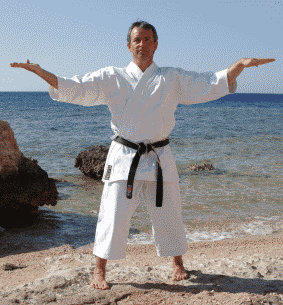
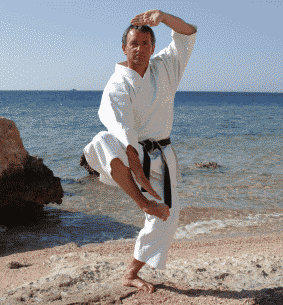
Happoren
is
a
peculiar
Kata.
It
is
rather
short
and,
in
concept
and
principle,
seems
to
be
a
mixture
of
Sanchin
and
Tensho.
However,
this
is
not
intended
as
speculation
about
a
possible
relationship
between
these
three
Kata!
Rather,
Happoren
appears
to
be
a
Kata
that
focuses
on
the
opposites
of
tension
and
relaxation.
It
uses
isometric
muscle
tension
and
breathing
techniques
that
are
atypical
for
crane
Kata.
However,
it
is
by
no
means
certain
whether
this
is
authentic.
Kata
are
still
subject
to
development
and
are
rarely
passed
on
in
their
original
form
in
every
detail.
There
are
different
versions
of
Happoren
but
also
the
shorter
ones
easily
requires
more
than
two
minutes.
This
is
primarily
due
to
the
concentration
on
breathing
and
the
associated
slowness
of
the
techniques.
Most
techniques
can
be
practiced
fast
or
slowly
to
very
slowly.
Despite
this,
or
perhaps
because
of
this,
Happoren
is
a
difficult
Kata.
However,
practicing
Happoren
has
a
very
positive
effect
on
health,
as
all
of
the
techniques
are
also
good
gymnastic
exercises,
especially
for
the
joints.
An
alternative
name
for
Happoren
is
Paipuren/Papuren.
Happoren
is
one
of
the
Kata
that
can
make the chi palpable in the hands!
Meaning of the name
Moves: 35
Haufa
Classification
Shorei-Ryu
Style
Shito Ryu
Level
Advanced
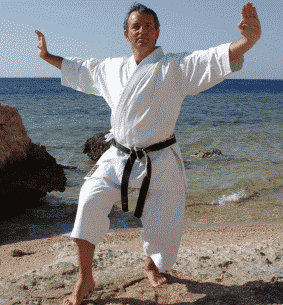
Haufa
is
a
relatively
short
Kata.
It
begins
similarly
to
Hakkaku
and
Hakutsuru.
However,
its
focus
is
much
more
on
the
techniques
Kakiwake
Uke,
Kuri
Uke,
and
especially
Haito-Uchi.
This
technique
is
performed
three
times
with
one
hand
and
five
times
with
both
hands.
The
biomechanics
of
correct
shoulder
use
are
of
fundamental
importance.
Haufa
is
very
elegant,
with
the
body
moving
slowly
and
calmly,
while
the
arm
techniques,
sudden
and
unexpected,
demonstrate
an
immensely
fast
pace.
Although
the
Kata,
viewed
superficially,
appears
undemanding
and
contains
only
a
few
techniques,
its
technical
applicability
is
quite
extensive.
In
addition,
the
techniques
possess
very
high
striking
power
due
to
their
biomechanics.
In
general,
the
ancient
White
Crane
techniques
are
very
dangerous
in
real-life
practice.
Although
almost
all
striking
and
thrusting
techniques
are
performed
with
open
hands,
their
effectiveness
and
impact
are
rated
higher
than
with
closed-fist
techniques.

Meaning of the name
Moves: 31
Shinpa
Classification
Shorei-Ryu
Style
Shito Ryu
Level
Advanced
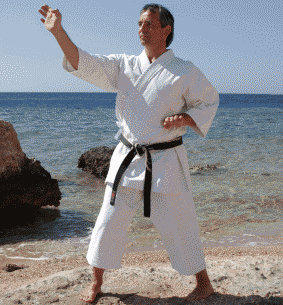
The
origin
of
this
Kata
is
unknown.
However,
according
to
Kenei
Mabuni,
it
is
of
Chinese
origin.
Due
to
the
techniques
it
contains,
such
as
Kuri
Uke
and
Koken,
it
may
originate
from
the
White
Crane
style.
The
Kata
is
very
short,
and
Kuri
Uke
in
Sanchin
Dachi
followed
by
Gyaku
Zuki
is
performed
repeatedly.
The
technical
variety
is
rather
limited,
but
the
Kata
is
nevertheless
interesting
and
surprisingly
difficult
to
learn.
The
turns
after
executing
Mae
Geri,
in
particular,
require
special
hip
movement.
The
Kata
is
primarily
known
in
the
Shito-ryu schools and is rarely practiced there, even so.
Datenschutzerklärung:
Bei
karatekata.de
handelt
es
sich
um
ein
rein
informatives
Online
Angebot ohne kommerzielle Funktionen.
Alle
hier
veröffentlichten
Publikationen
enthalten
persönliche
Meinungen
des
Autors.
In
Fällen,
in
denen
externe
Informationen
eingebunden
werden,
werden
entsprechende
Quellenangaben
hinzugefügt.
Links
zu
anderen
Internetangeboten
oder
automatische
Weiterleitungen
sind
nicht
implementiert.
Navigation
Kata

DSGVO relevante Cookies sind nicht implementiert.
























































karatekata.de



